


On March 26, 2026, the Cluster Mobility & Logistics hosted the online webinar “Driving Innovation: Mobility-as-a-Service Ecosystems” as part of its ongoing DRIVING INNOVATION series. The event brought together stakeholders from across the mobility sector to explore current developments, challenges, and opportunities related to Mobility-as-a-Service (MaaS), with a particular focus on implications for small and medium-sized enterprises (SMEs).
The webinar centered on the transformation of mobility systems toward integrated, user-centric service platforms. MaaS concepts aim to combine multiple modes of transport into a single digital interface, enabling users to plan, book, and pay for multimodal journeys seamlessly. This shift represents a significant structural change in the mobility ecosystem, moving away from ownership-based models toward service-oriented solutions and requiring new forms of collaboration between public and private actors.
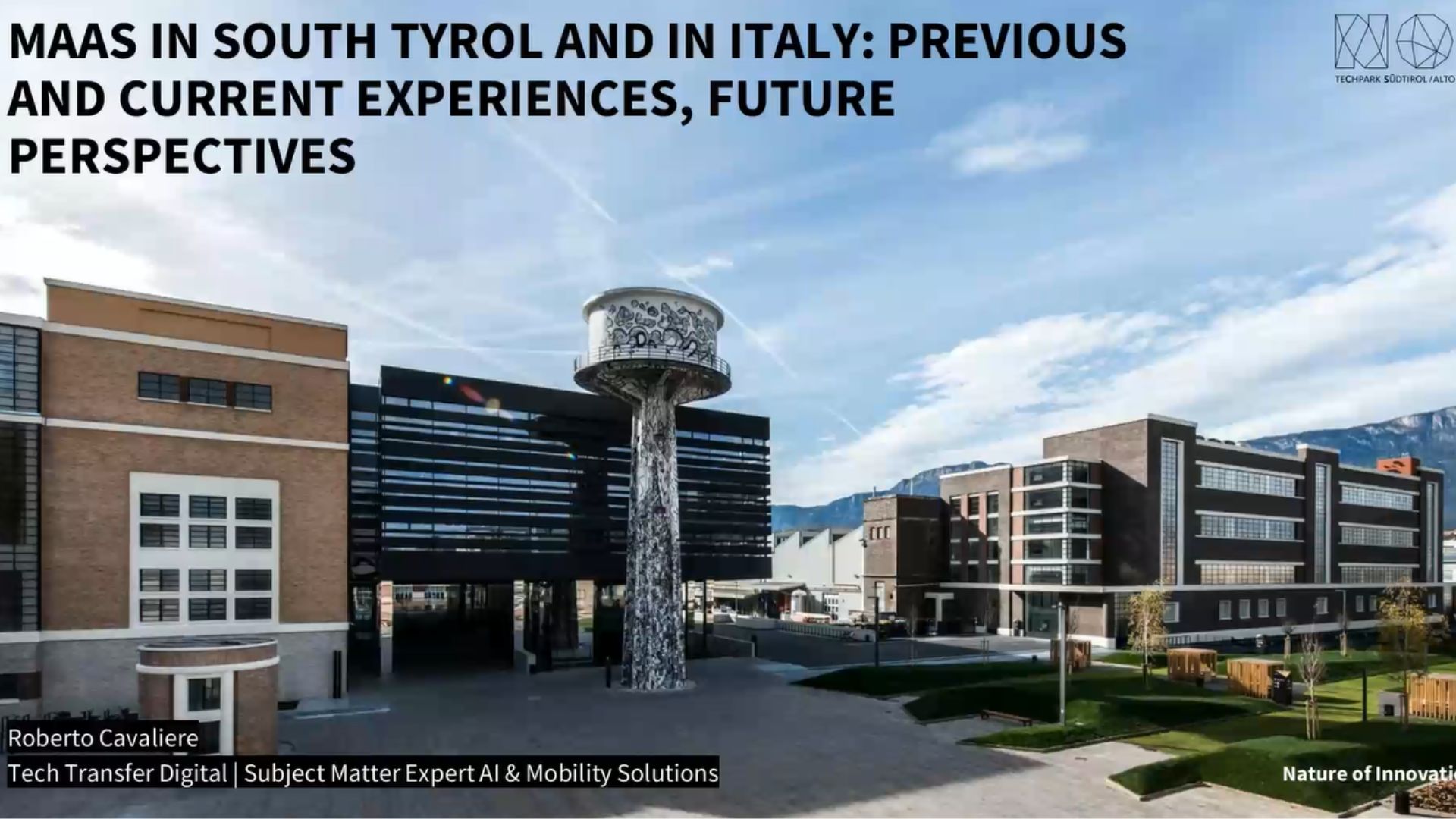
Two expert presentations provided practical insights into the development and implementation of MaaS ecosystems. Roberto Cavaliere from NOI Techpark introduced data-driven approaches to building open mobility platforms. Using the “Open Data Hub Mobility” in South Tyrol as an example, he illustrated how the integration and standardization of mobility data can serve as a foundation for interoperable MaaS solutions. In addition, reference was made to the national pilot initiative “MaaS4Italy,” highlighting how such concepts are being tested and scaled at a broader level.
Complementing this perspective, Robin Nedoma from Peoplecar presented a community-based car-sharing model designed primarily for smaller municipalities. The approach combines shared electric mobility with local participation, offering an example of how decentralized and cooperative solutions can contribute to a broader MaaS ecosystem. This use case underscored the relevance of flexible and regionally adaptable models, particularly in areas where large-scale platform solutions may not be feasible.
Throughout the session, key questions for businesses were addressed, including the future role of suppliers and service providers within MaaS value chains. The discussion emphasized the importance of data integration capabilities, strategic partnerships, and the development of new service-oriented business models. For SMEs in particular, the transition toward MaaS presents both challenges and opportunities, requiring proactive adaptation to remain competitive in an evolving market environment.
The webinar also provided an international perspective, drawing on examples from different European regions. These cases highlighted that MaaS implementation is highly context-dependent, shaped by local infrastructure, governance structures, and user needs. While urban areas may benefit from comprehensive platform solutions, rural regions offer potential for smaller-scale, innovative approaches driven by local stakeholders.
As part of the Interreg project Drive2Transform, the event contributed to fostering cross-regional exchange and supporting the transformation of the mobility and automotive sectors in Central Europe. The DRIVING INNOVATION series continues to serve as a platform for knowledge transfer, networking, and discussion of future-oriented mobility solutions.