


Impact Measurement & Sensor Technology in the Obermünster District (WiSe OMV)
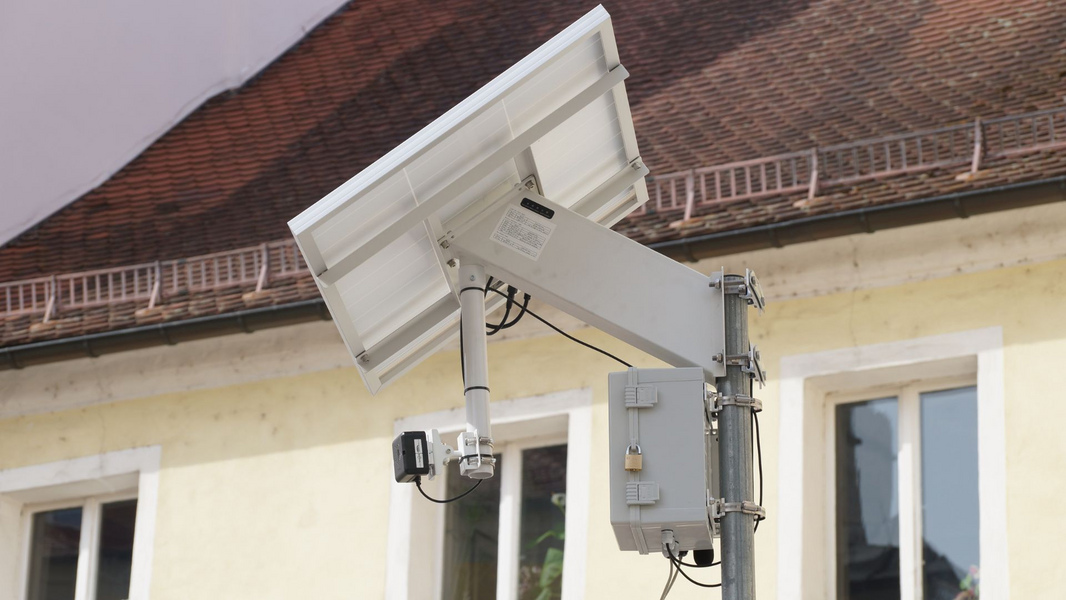
The City of Regensburg plans to undertake a comprehensive redesign of the Obermünster District starting in 2028, transforming it into a green, accessible, and livable urban space. Initial temporary measures have been in place since 2025. The accompanying “WiSe OMV” project focuses on establishing a sensor network: Starting in 2026, various sensors will be installed, interconnected, and linked to a shared data platform. This will enable movement, environmental, and noise data to be automatically collected, consolidated, and processed in a manner tailored to specific target groups. The goal is to create areliable data foundation that complies with data protection regulations. This will reveal the actual impact of the temporary measures on the neighborhood and identify insights that can inform future urban development.
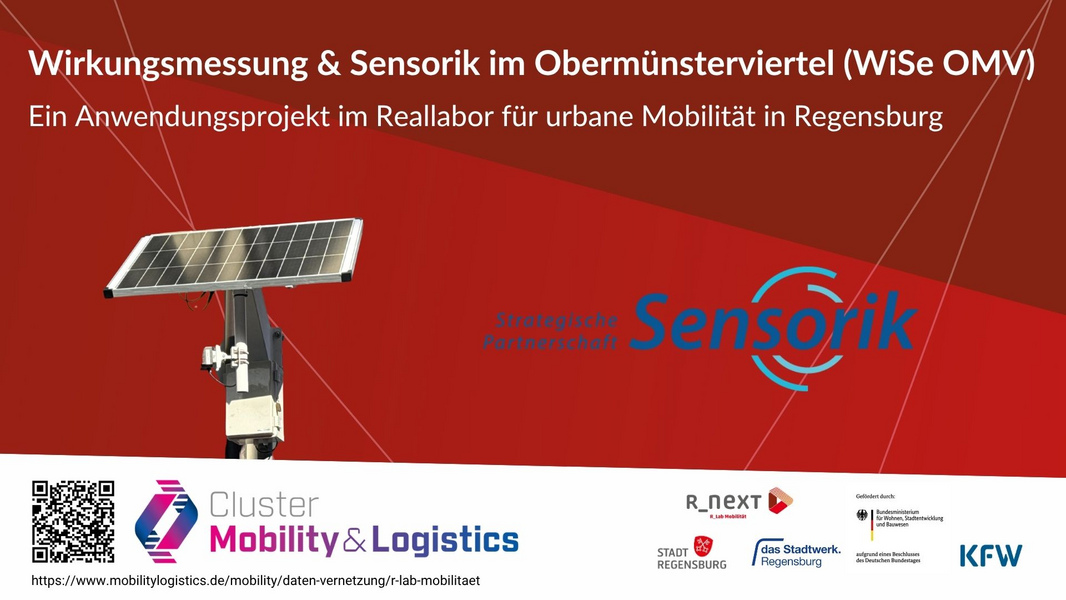
>>> To the image film about the project Impact Measurement & Sensor Technology in the Obermünster District (WiSe OMV). <<<
Goals & Vision
Scope & Implementation
What is being measured?
The study examines how immediate measures and the gradual redesign of the neighborhood affect mobility flows in public spaces, particularly with regard to duration of stay, visitor frequency, and typical routes. Additionally, changes in noise levels and acoustic events are analyzed. Another focus is on environmental data, particularly air quality, for example in connection with traffic calming or greening measures. Additionally, the study examines the influence of events as well as weather- and environment-related factors on the use of public space and air quality.
Strategische Partnerschaft Sensorik e.V. is responsible for the technical implementation, and the Cluster Mobility & Logistics is responsible for project coordination, stakeholder management, and communication. The client is the City of Regensburg.
Project duration: September 2025 – December 2026
The Impact Measurement & Sensor Technology in the Obermünsterviertel (WiSe OMV) project is an applied research project within R_Lab Mobility, the real-world laboratory for urban mobility of the R_NEXT smart city project.
Relevance for Urban Development & Smart Cities
The project contributes to the strategic goals of the Regensburg Plan 2040—particularly in the areas of mobility and the digital and smart city:
Outlook & Further Development
Following the pilot phase, it will be possible to further develop the project and apply the insights gained to other urban areas and pilot sites.
In a second project phase, starting in summer 2026, the measurement system will be expanded to include mioty wireless technology. The aim is to test a mioty gateway in a real-world old town environment and to validate a scalable data connection to the Mobility Data Hub. The first step will be to switch the mobile sensor box to mioty. In addition, the sensor-based impact measurement will be extended to Neupfarrplatz. There, as part of the Climate Lab, additional measures such as shading elements and misting systems will be implemented in summer 2026 and monitored using supplementary sensors. All data will be consolidated in the Mobility Data Hub to provide a unified overview of the effects in the two old town areas, the Obermünsterviertel and Neupfarrplatz.
The results will also be incorporated into the City of Regensburg’s IoT concept for the development of a city-wide IoT infrastructure, which will form the basis for future sensor-based applications.
Further Links
Uwe Pfeil
Clustermanager
Tel. +49 941 604889 55
uwe.pfeiltechbase.de