


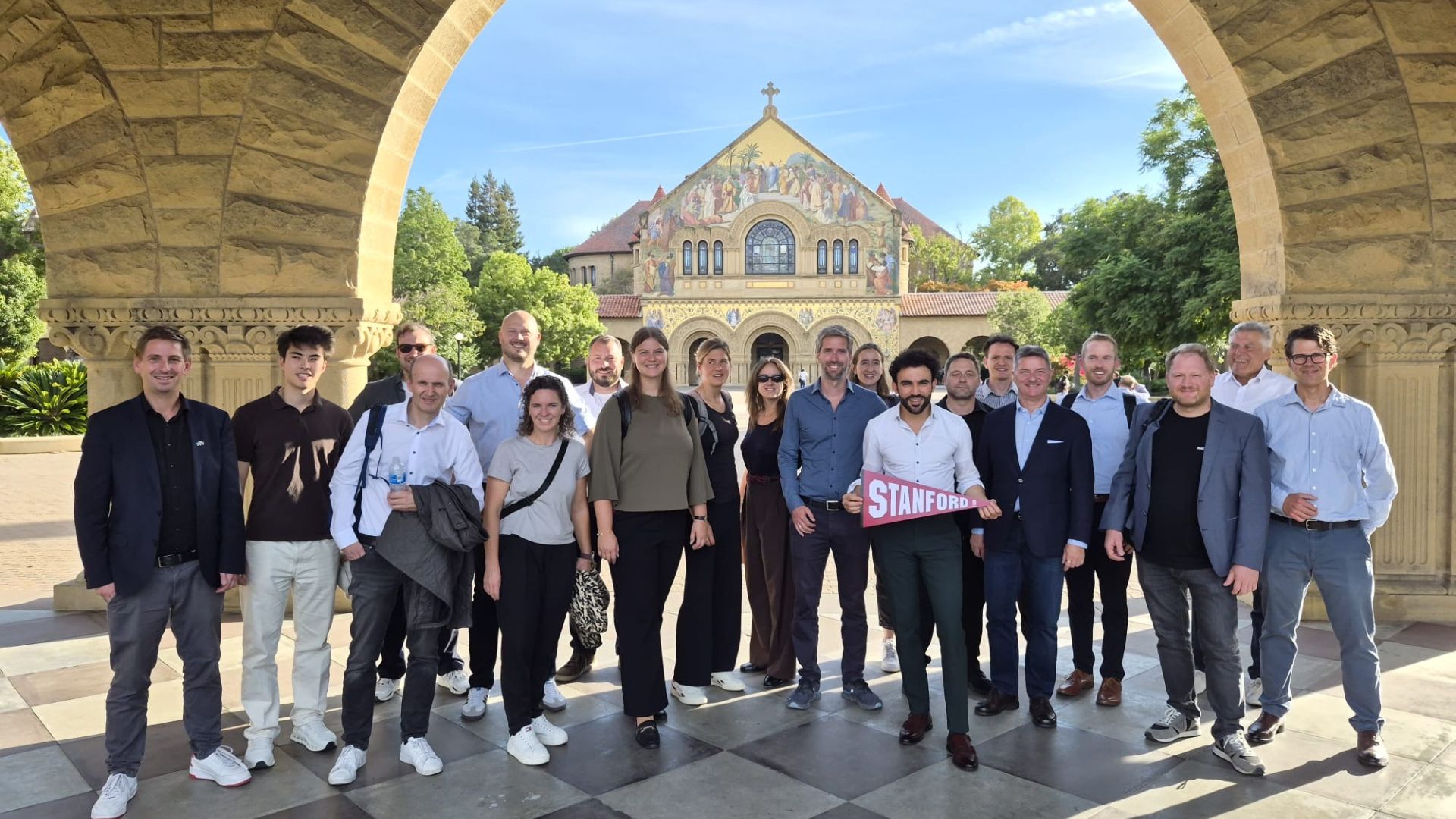
How can artificial intelligence and autonomous systems move from development into practical application more quickly? What conditions are needed to make this happen, and what can a regional innovation ecosystem like Regensburg learn from Silicon Valley? These questions were the focus of a delegation trip to the San Francisco Bay Area and Silicon Valley from 20 to 25 September 2026, organised by the Bavarian Ministry of Economic Affairs, Regional Development and Energy and Bayern International. Anne Häner took part on behalf of TechBase Regensburg, Cluster Mobility & Logistics and AIR Artificial Intelligence Regensburg.
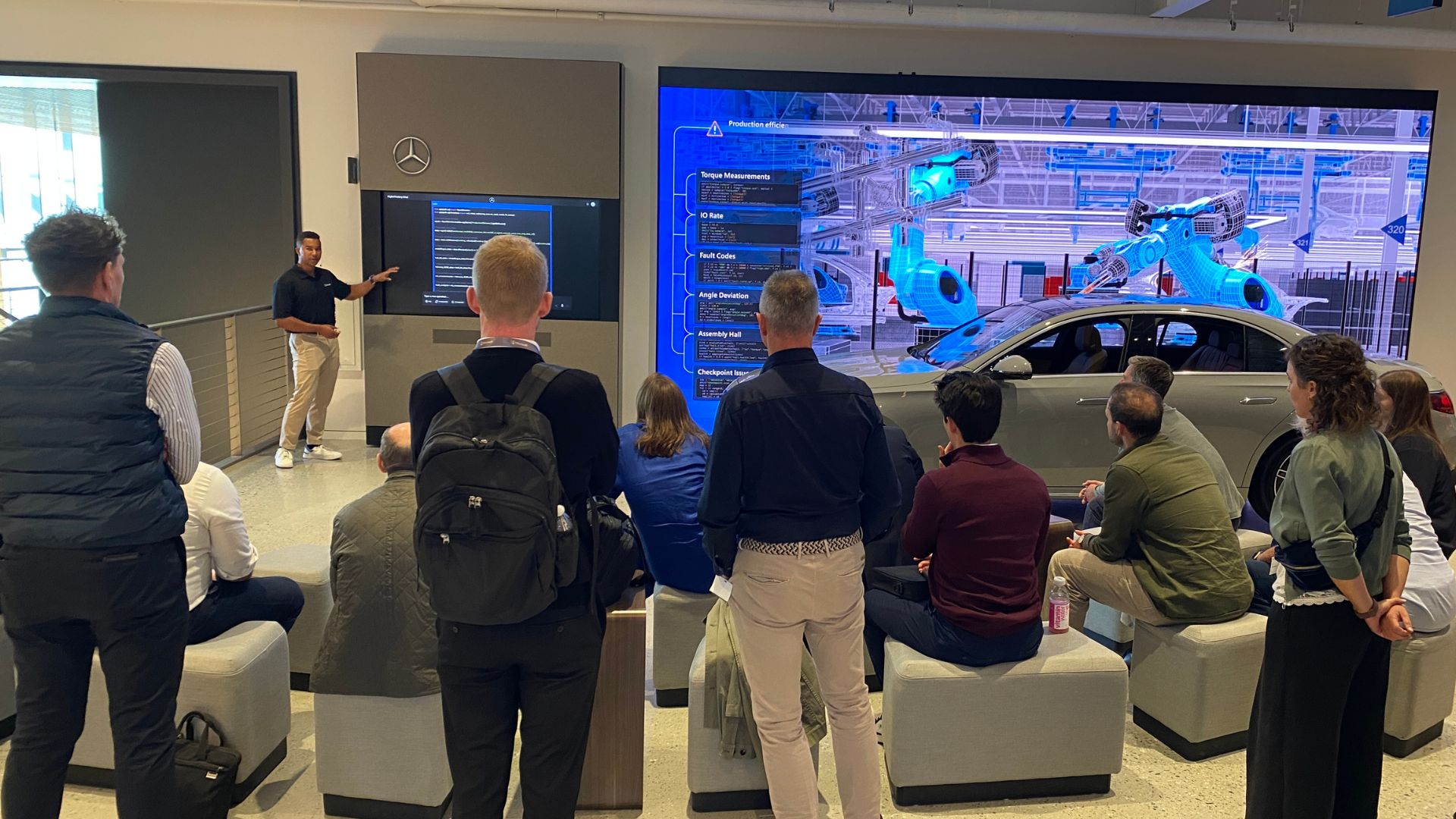
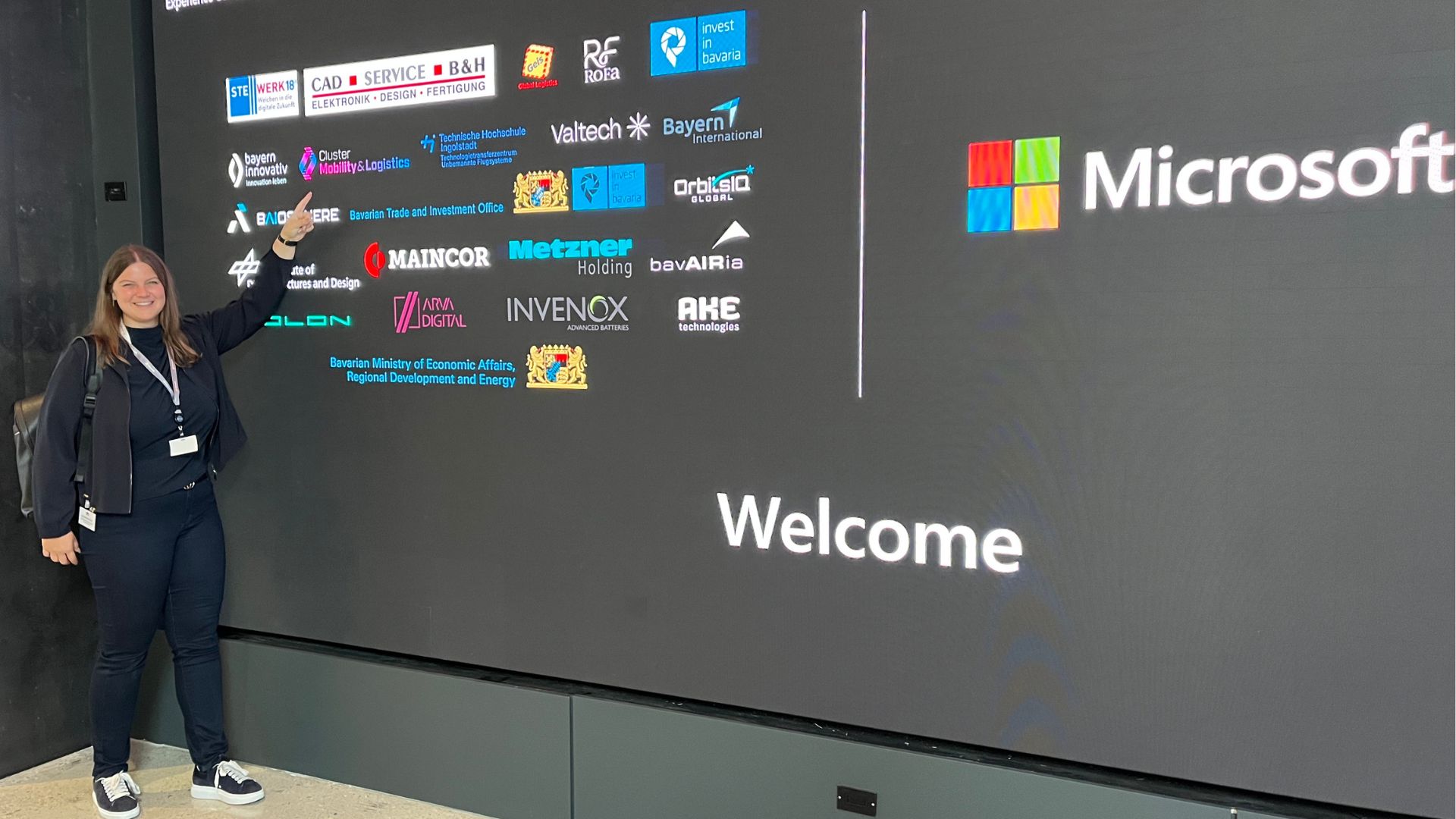
At stops including the BMW Group Technology Office, SiMa.ai, Plug and Play, the City of San José and Microsoft, the programme focused on current developments in Physical AI, Agentic AI, autonomous mobility and industrial applications. Beyond the individual technologies, the trip showed above all which conditions help innovations reach application faster.
One thing was evident from the cityscape alone: AI is everywhere in the Bay Area. Advertising by AI companies appears in many places, even though many of the offerings are aimed primarily at business customers. This shows how firmly AI is already established there as an economic and innovation topic, and how strong the region’s early-adopter culture is.
Key insight 1: Speed comes from early testing and clear decisions
A major difference from the German innovation environment lies in the speed at which new technologies are tried out and developed further. “Fail fast”, rapid prototyping, a consistent focus on users and a strong willingness to test new approaches under real-world conditions shape how innovation is understood in Silicon Valley. Decisions are made early, experience is evaluated quickly and promising approaches are pursued consistently. For companies and innovation networks, this means the starting point is not optimising a concept for as long as possible, but learning quickly from concrete applications.
The decisive step is not the PoC itself, but the transition from prototype to productive operation. This requires a robust use case, suitable partners and clear criteria for scaling and for stopping, all defined early on. For mobility innovations in particular, this also raises the question of whether more should be invested in test infrastructure, organisational structures and living labs that accelerate this transfer.
Key insight 2: Physical AI is becoming increasingly relevant for mobility and industry
The visit to SiMa.ai showed how strongly AI is evolving from purely digital applications towards physical systems. Physical AI connects AI with vehicles, robots, machines or camera systems, enabling them to perceive their environment and respond to it directly. A key prerequisite is powerful yet energy-efficient computing directly within the system itself. Applications range from automotive and robotics to industrial automation, smart cameras and aviation. This development is particularly relevant for Regensburg because it builds directly on existing expertise in automotive, industry, sensor technology, robotics and artificial intelligence.
Key insight 3: Talent, Mindset, Capital – innovation needs a closely connected ecosystem
A concise guiding principle from Silicon Valley is: “Talent. Mindset. Capital.” Start-ups, companies, research institutions, investors and customers are closely connected. As a result, ideas meet talent, potential users and the capital needed for implementation at an early stage.
This was particularly clear at Plug and Play, which has a strong focus on B2B applications: start-ups are matched with corporates in a targeted way to identify concrete use cases. The aim is a PoC within two to four months; the process from initial matching to production at the company should ideally take around 18 months.
The ecosystem is therefore driven not only by ideas, but just as much by capital and implementation. New approaches get an early chance to prove themselves on the market, while projects that do not work are consistently discontinued.
Companies, universities, start-ups, public administration and networks are also present in Regensburg. The lever lies in bringing these players together even more purposefully for concrete applications, pilot projects and scaling.
Key insight 4: Living labs can shorten the path from technology to application
The visit to the Traffic Management Center of the City of San José showed how important real-world test environments are for new mobility solutions. There, technologies are trialled under real conditions in time-limited pilot projects before permanent regulatory decisions are made. With R_Lab Mobilität and the experience gained from RECIPROCITY, Regensburg already has important foundations for this approach. At the same time, it became clear that, despite the high pressure to innovate in the Bay Area, cities such as San José must keep public benefit and their responsibility towards citizens in view.
The mutual learning process is therefore particularly interesting: while the Bay Area provides impetus in terms of speed, scaling and implementation, there is also interest there in European experience with integrated mobility, regulation and research cooperation. Knowledge transfer is not a one-way street.
Key insight 5: With Agentic AI, governance and responsibility take centre stage
The visit to Microsoft made clear that the next stage of AI development will increasingly be shaped by Agentic AI. While generative AI creates content, AI agents can independently take over work steps and execute processes. This shifts the discussion from the pure performance of the technology to questions of governance: Which agent may access which data? Which decisions may it make on its own? How are agents monitored, and how can systems from different providers work together securely?
For regions with a strong SME base in particular, it is therefore essential not to view the use of AI from a purely technical perspective. Companies need clear use cases, suitable data, skills and rules for responsible use. For the Regensburg innovation ecosystem, this results in a specific task: supporting companies in transferring Agentic AI into concrete industrial applications.
Key insight 6: Innovation also requires social and infrastructural balance
For all the fascination with the region’s speed and dynamism, areas of tension also became visible. The AI and technology boom is increasing pressure on housing, the labour market and infrastructure. At the same time, demand for high-performance digital and energy infrastructure is growing. Silicon Valley, too, faces the question of how growth can be made sustainable in social, economic and infrastructural terms over the long run.
This point in particular puts the image of Silicon Valley as an unqualified role model into perspective: not every challenge has been solved there. On questions of urban integration, regulation and the public benefit of new technologies, it is therefore worthwhile for California and Europe to learn from each other.
Key takeaways
1. Speed: Innovation needs fast decisions, real-world testing opportunities and structures that shorten the path from PoC to application.
2. Proximity within the ecosystem: In the Bay Area, start-ups, capital, companies, research and customers are located close together. Regensburg also benefits from short distances, and can make even greater use of its connections within Europe as a locational advantage.
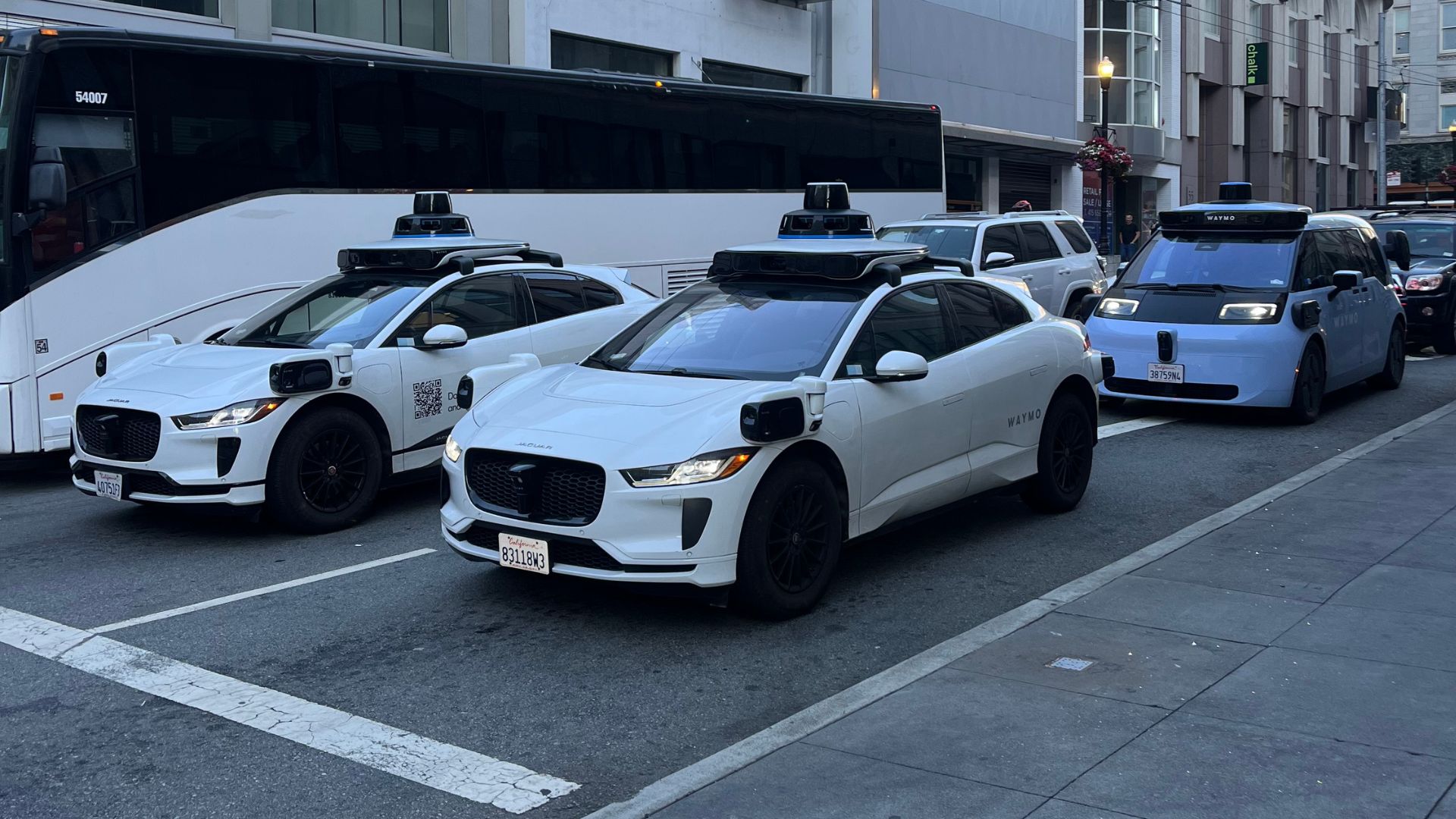
3. Technology needs to be embedded: Waymo, Zoox and others show how far autonomous mobility has already advanced technically. For Bavaria and Europe, the question now is how companies can position themselves in this market and how autonomous solutions can be meaningfully integrated into existing mobility systems. At the same time, not everything has been solved in Silicon Valley either: there is also interest in European experience with regulation, public benefit and urban integration.
The key insight for Regensburg is therefore not to copy Silicon Valley. Rather, the aim is to combine its strengths in speed, networking and implementation with our own expertise in industry, research, European cooperation and real-world test environments.