


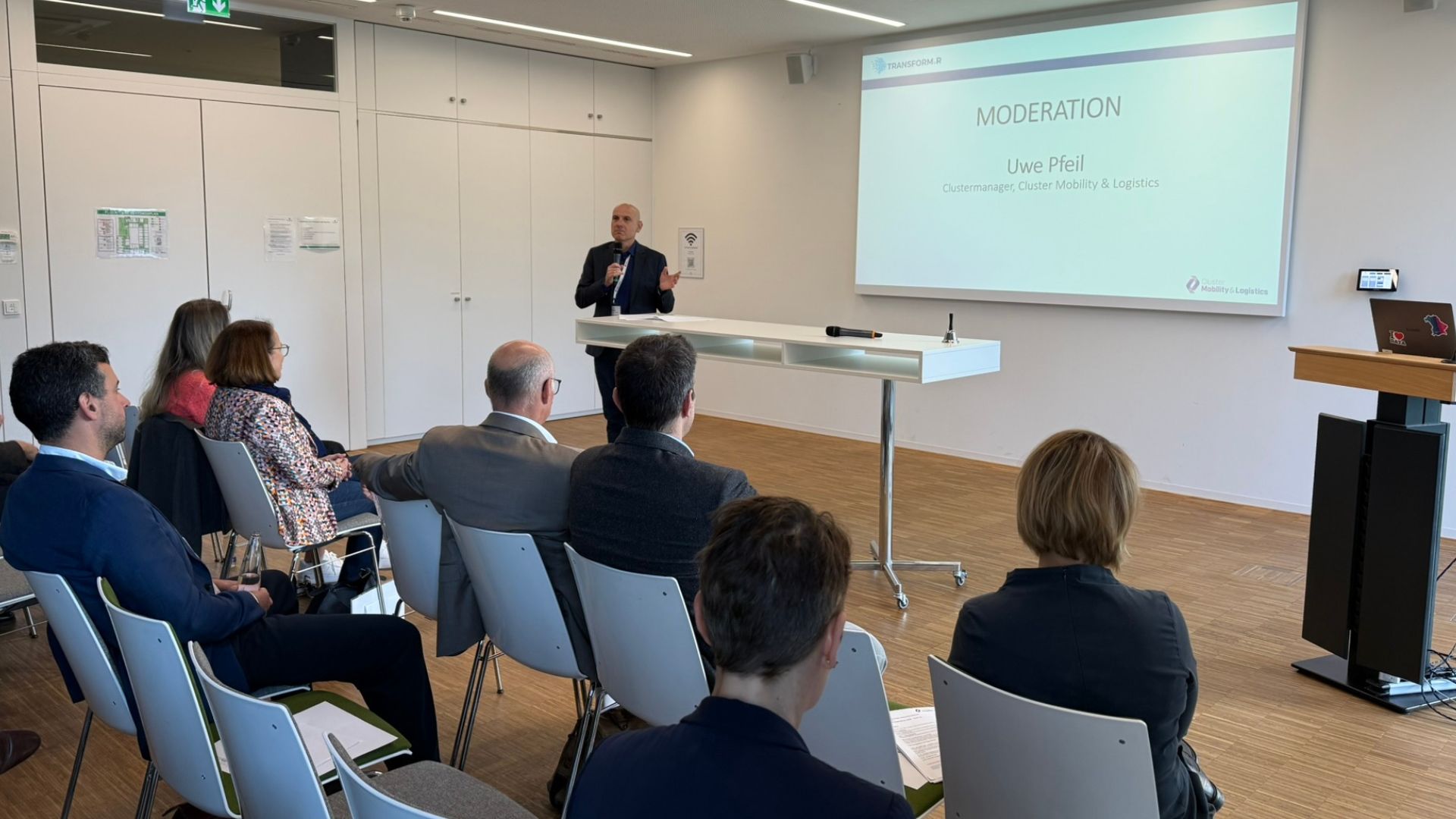

On October 1, 2025, the 5th Regensburg Transportation Congress took place at the TechBase Regensburg Innovation Center. Organized by the Cluster Mobility & Logistics in cooperation with TechBase, the event—titled “Digitalization and Alternative Propulsion Systems—Impact on Transportation Logistics”—focused on current developments in sustainable technologies and digitally supported solutions in the transportation sector.
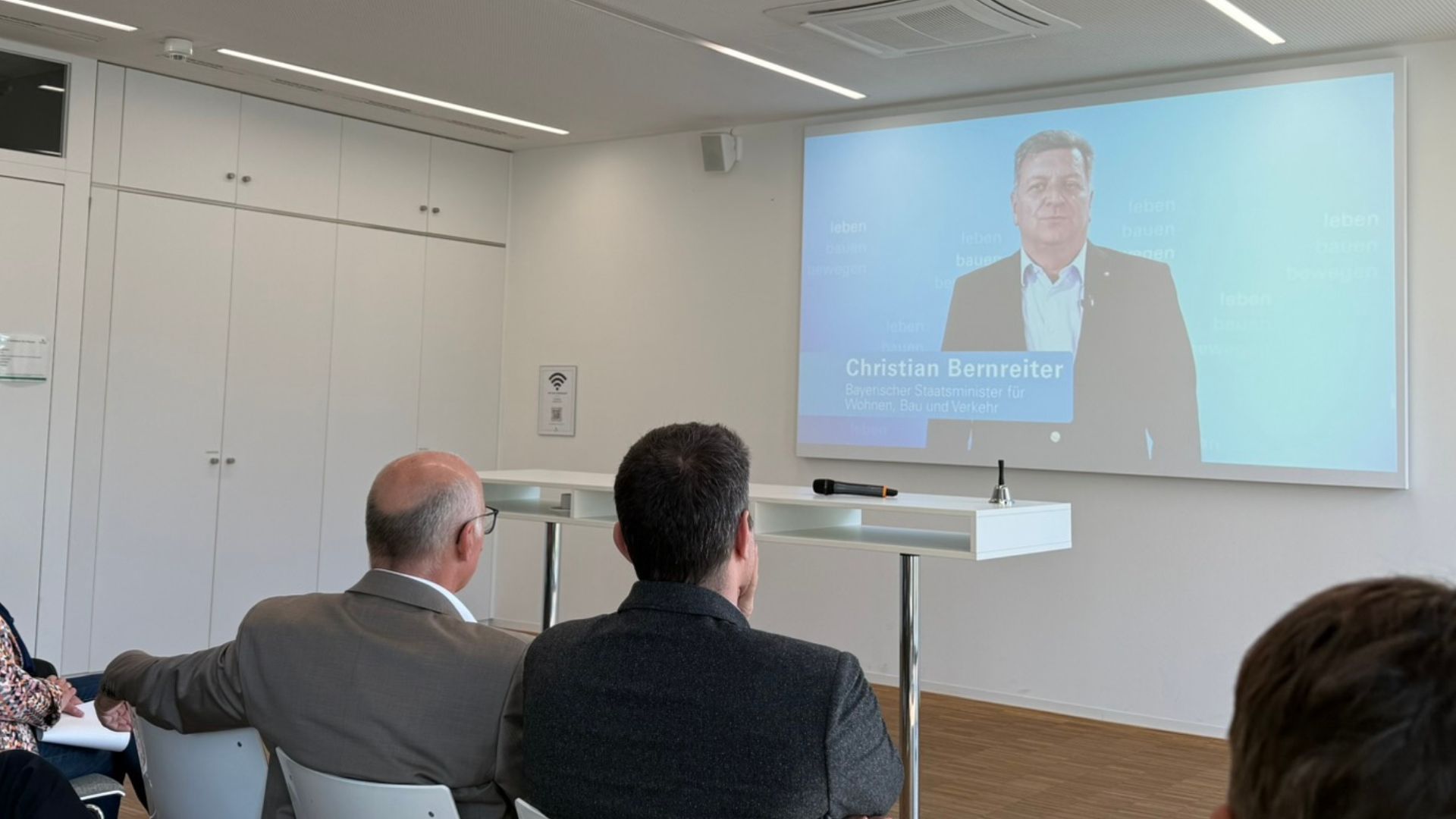
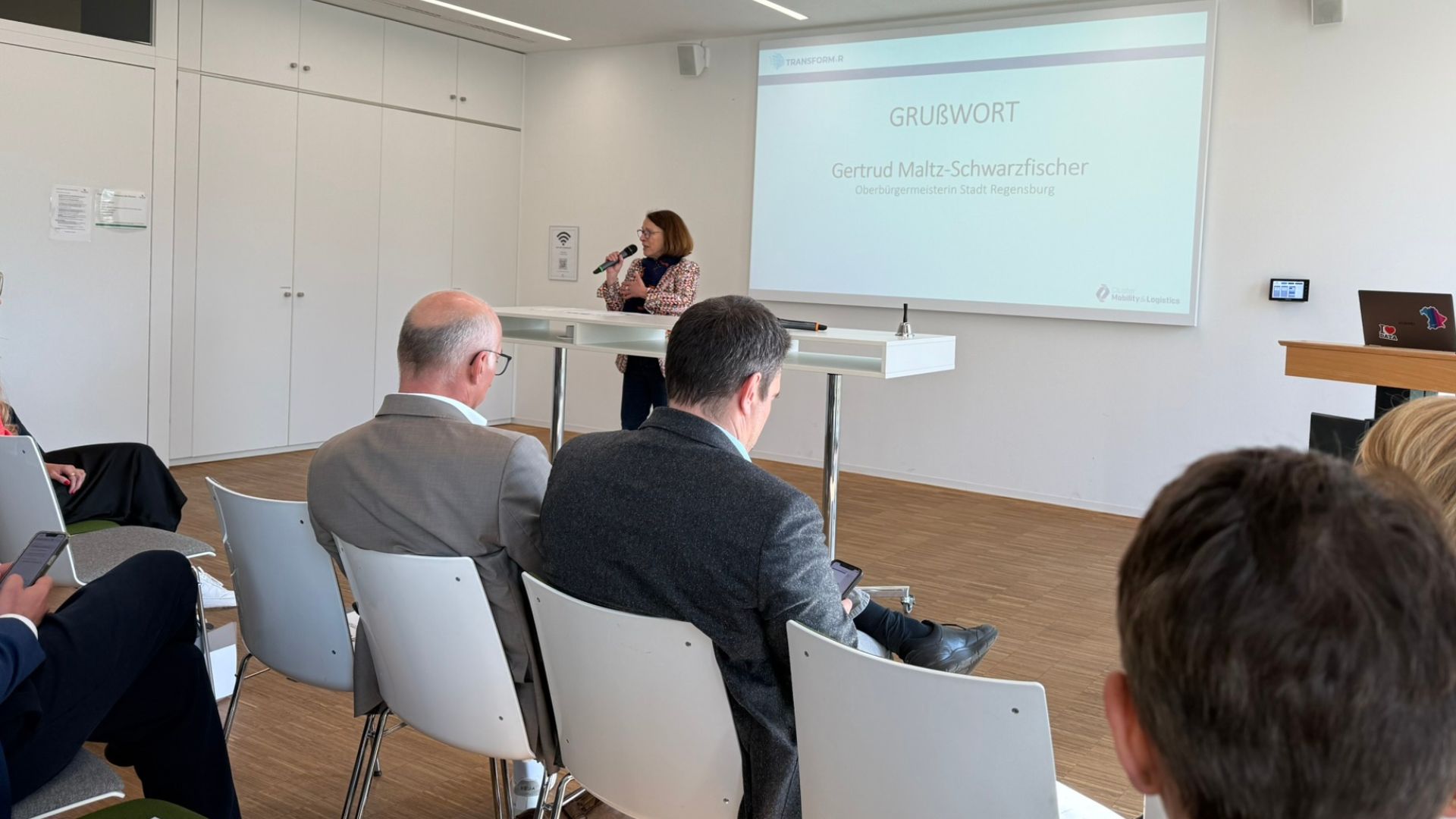
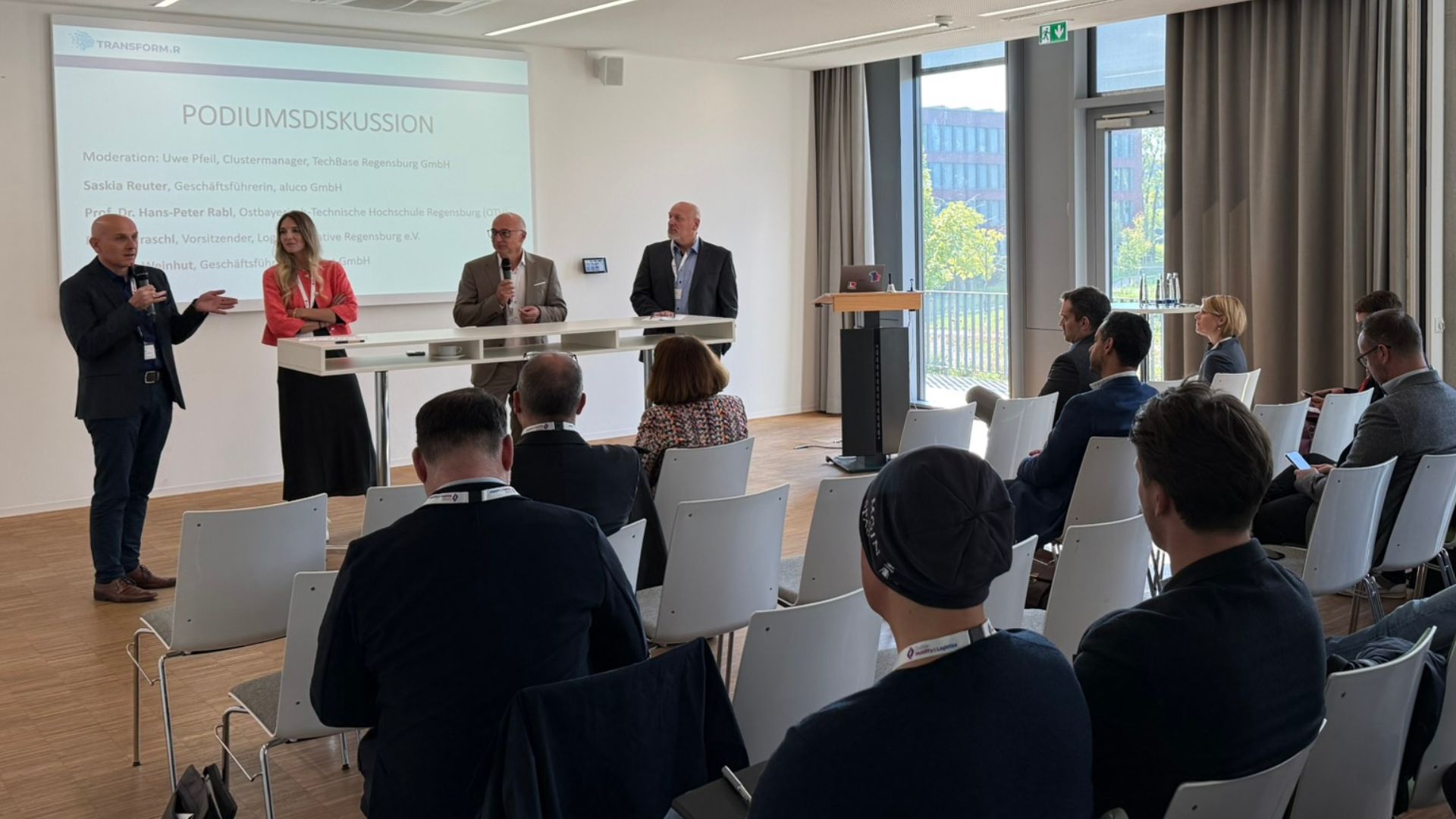
The program was opened by Alexander Rupprecht, Managing Director of TechBase, followed by welcoming remarks from Minister of State Christian Bernreiter (via video message) and Regensburg Mayor Gertrud Maltz-Schwarzfischer. A panel discussion featuring representatives from industry and academia—including Saskia Reuter (aluco GmbH), Prof. Dr. Hans-Peter Rabl (OTH Regensburg), Robert Praschl (Logistikinitiative Regensburg e.V.), and Andreas Weinhut (Weinhut GmbH)—explored the conference topics from a practical perspective.
The afternoon focused on three technical presentations that highlighted innovative approaches and technologies for sustainable transport logistics:
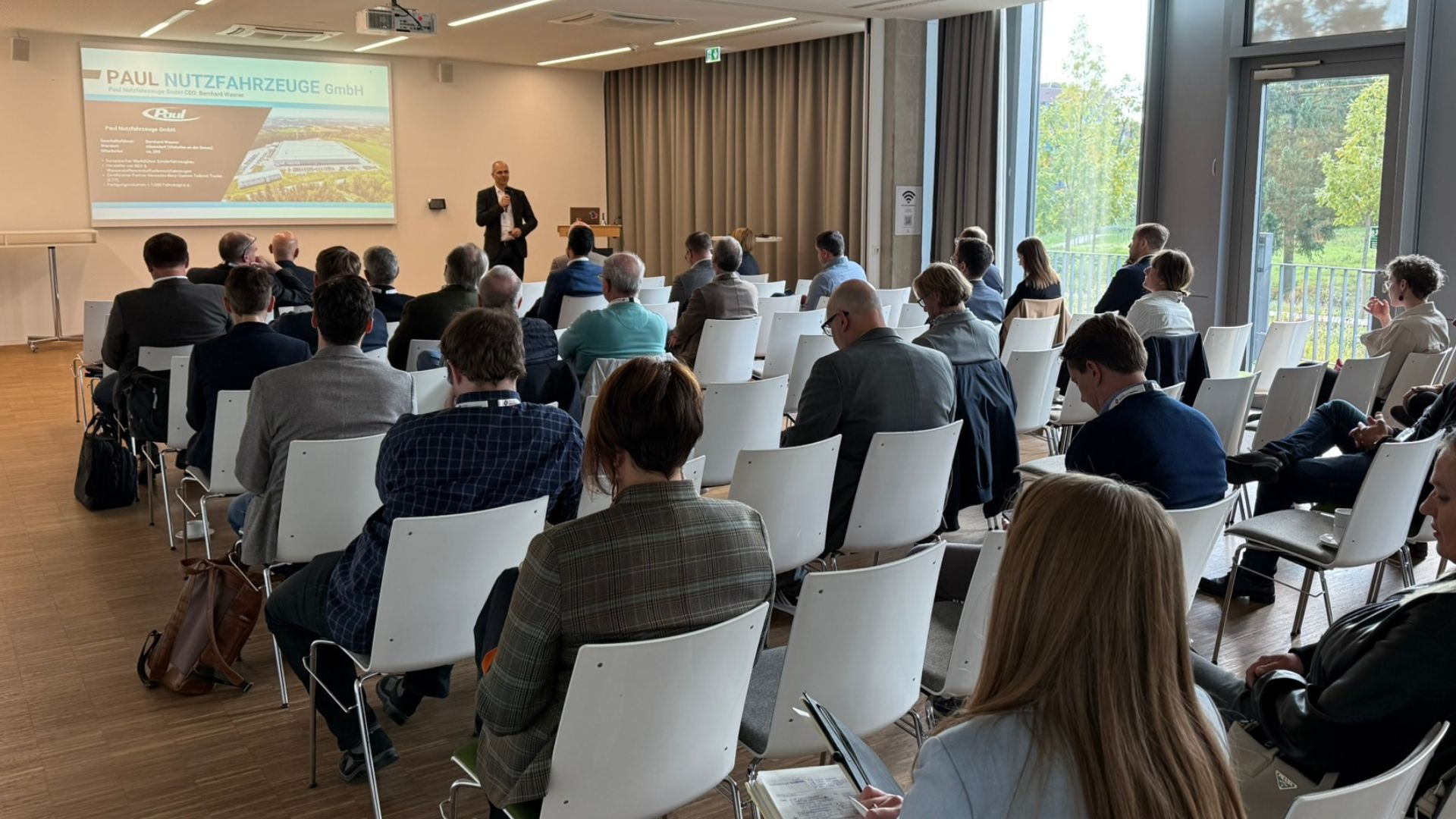
- In his presentation “H2 & BEV Trucks – Innovative Solutions for the Transport of the Future,” Bernhard Wasner of Paul Nutzfahrzeuge GmbH compared various drive technologies. He emphasized that hydrogen and battery-electric powertrains should be used complementarily depending on the application. Using the PH2P® project as an example, he showcased field-tested vehicles for CEP services, refrigerated transport, or factory traffic that have already covered over one million kilometers. Technically, the system is based, among other things, on fuel cells from Toyota and powertrains from Voith.
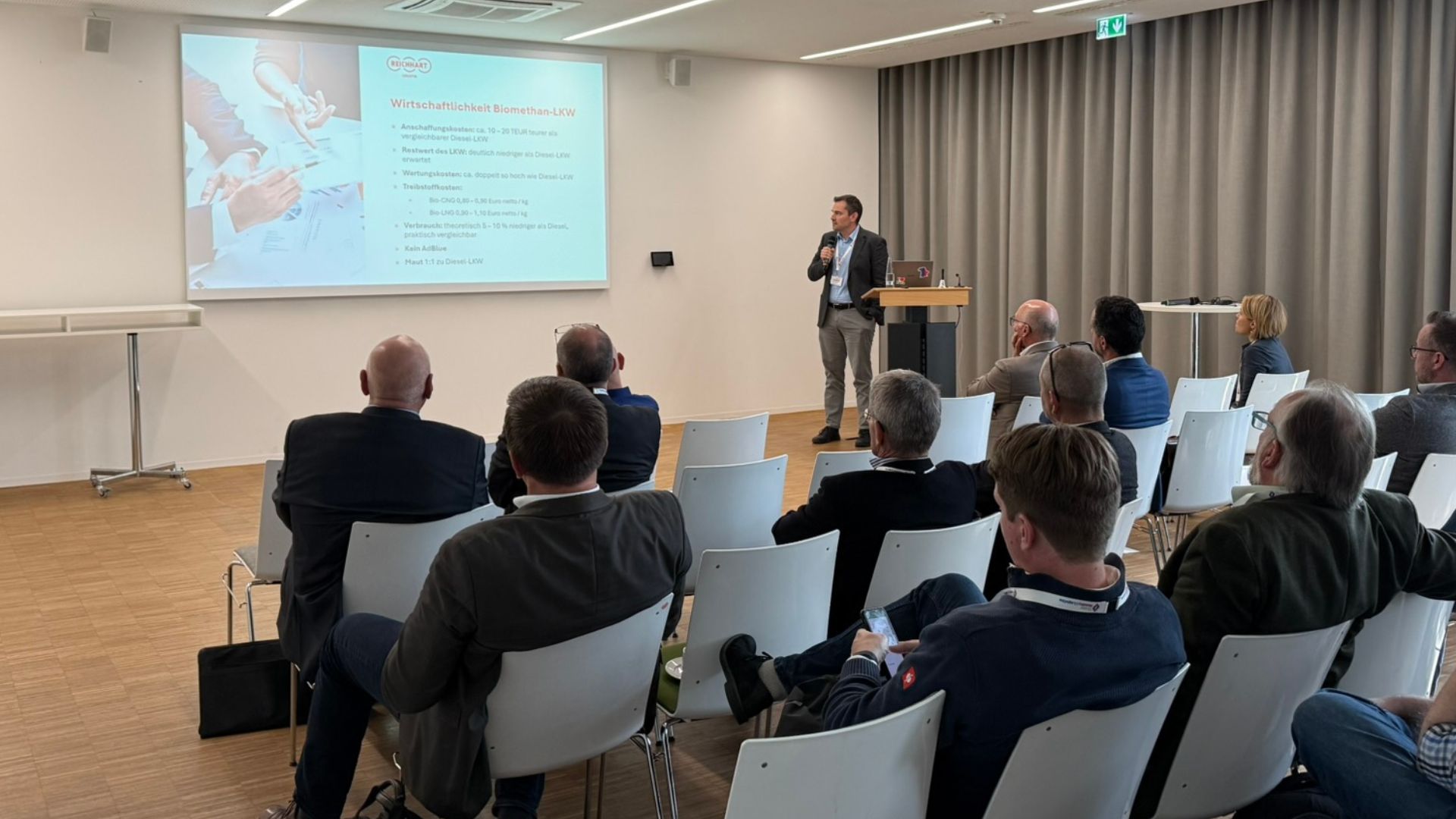
- Georg Berberich of REICHHART Logistik highlighted the role of biomethane as an alternative fuel in the context of increasing demands for CO₂ reduction. REICHHART uses second-generation biomethane (from waste materials) in its truck fleet and demonstrated how this technology is economically and operationally competitive compared to electric and hydrogen trucks. Practical examples—such as transport services for LKQ, BMW, or Airbus—demonstrated the potential for CO₂-neutral transport already available today.
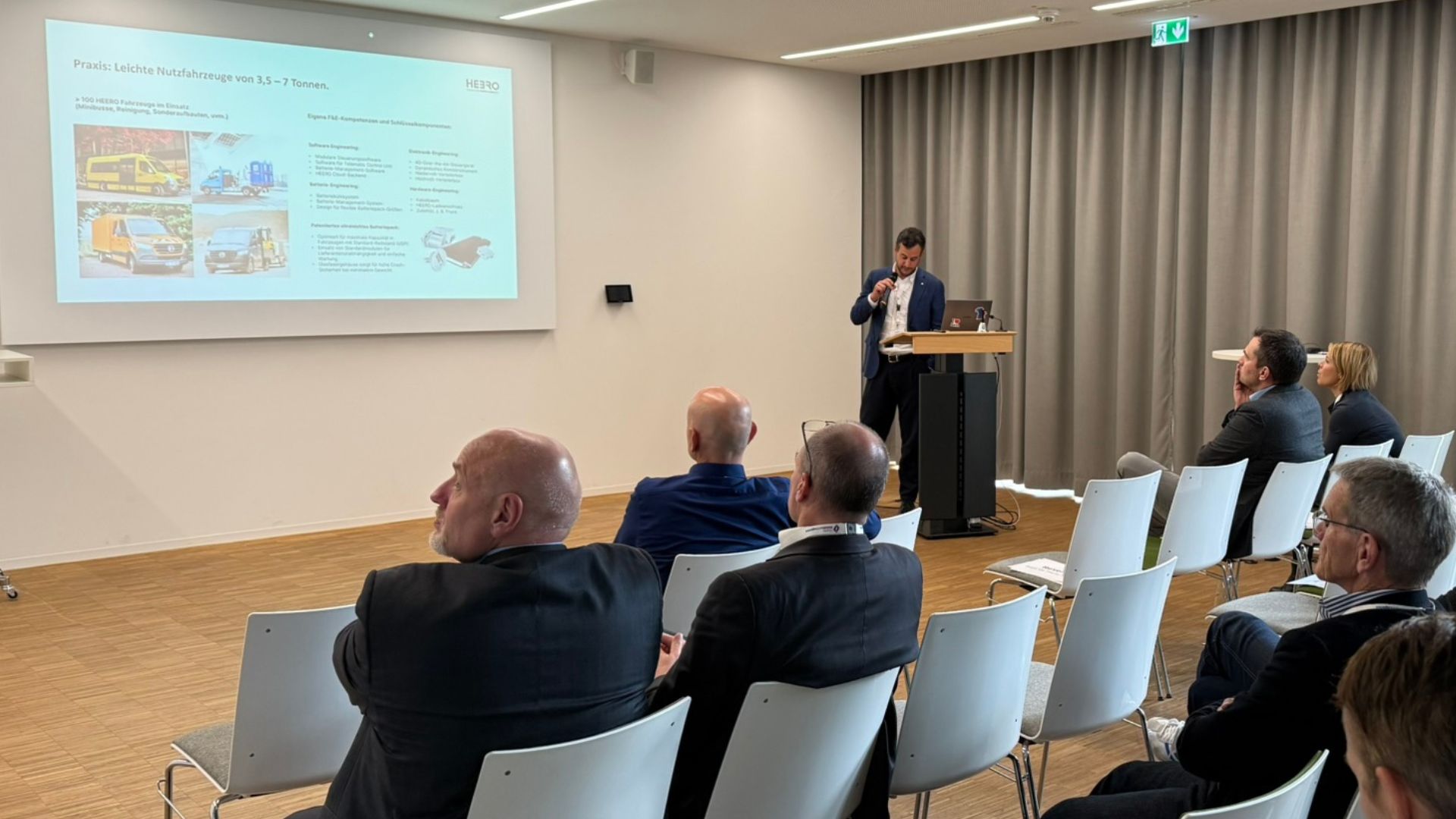
- In his presentation, Dominik Ashkar of E-Works Mobility GmbH emphasized the importance of vertical integration across the entire value chain in electromobility—from the battery cell through software to the cloud. He argued that Europe can only remain competitive through system expertise in key components such as battery management, software integration, and telematics. The light commercial vehicles developed by E-Works are already in use across Europe and are characterized by high energy efficiency and modular architecture.
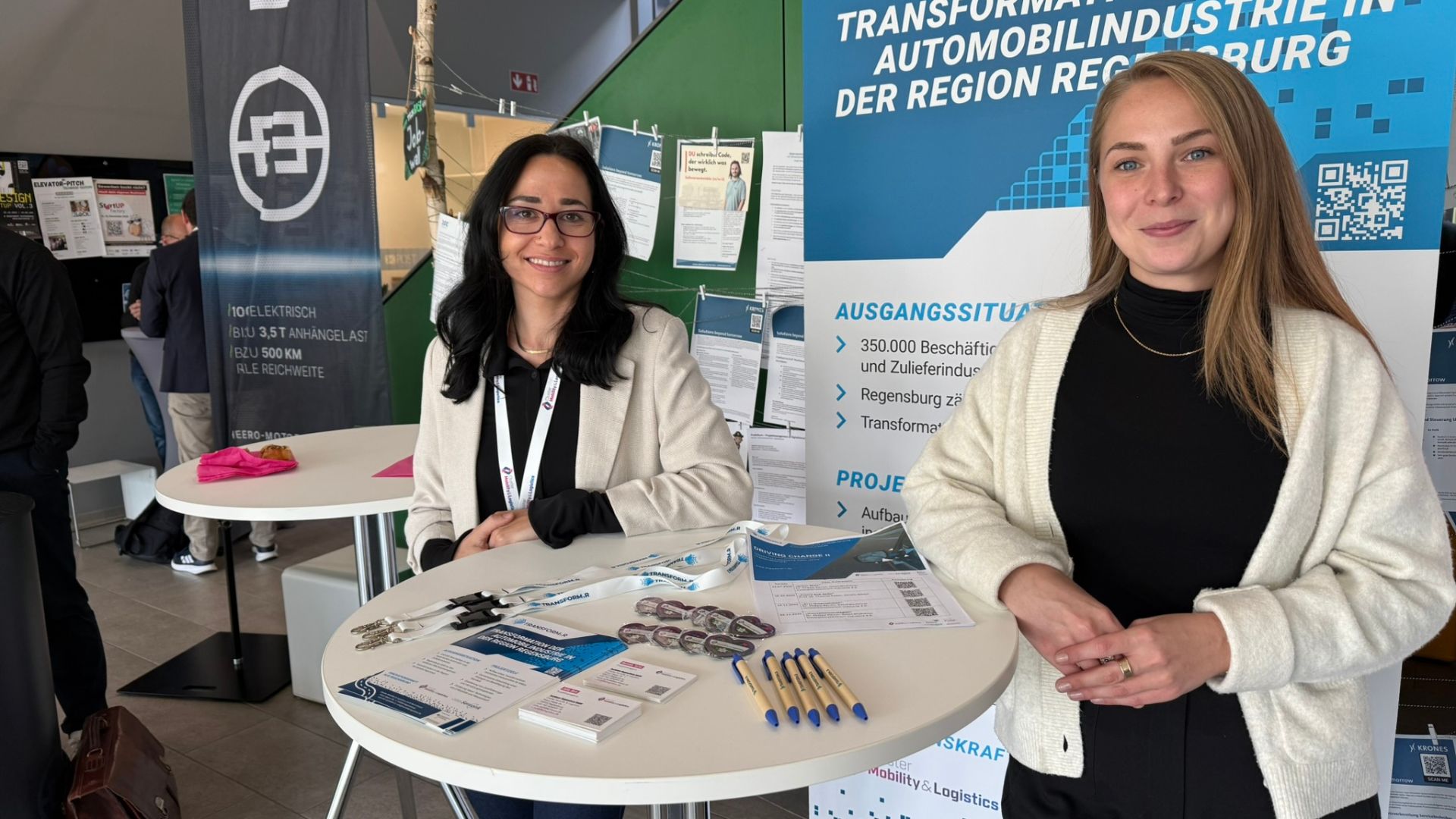
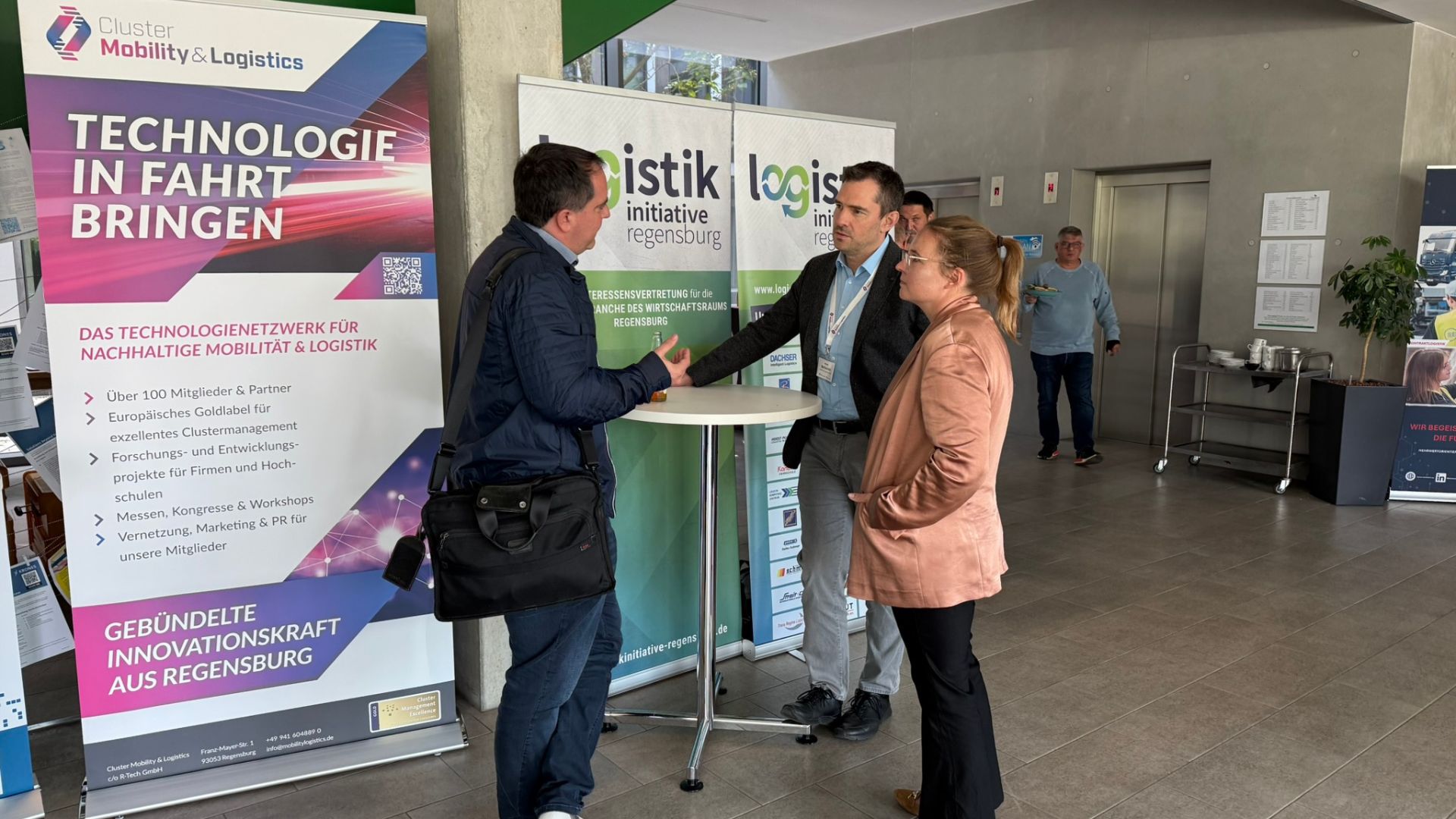
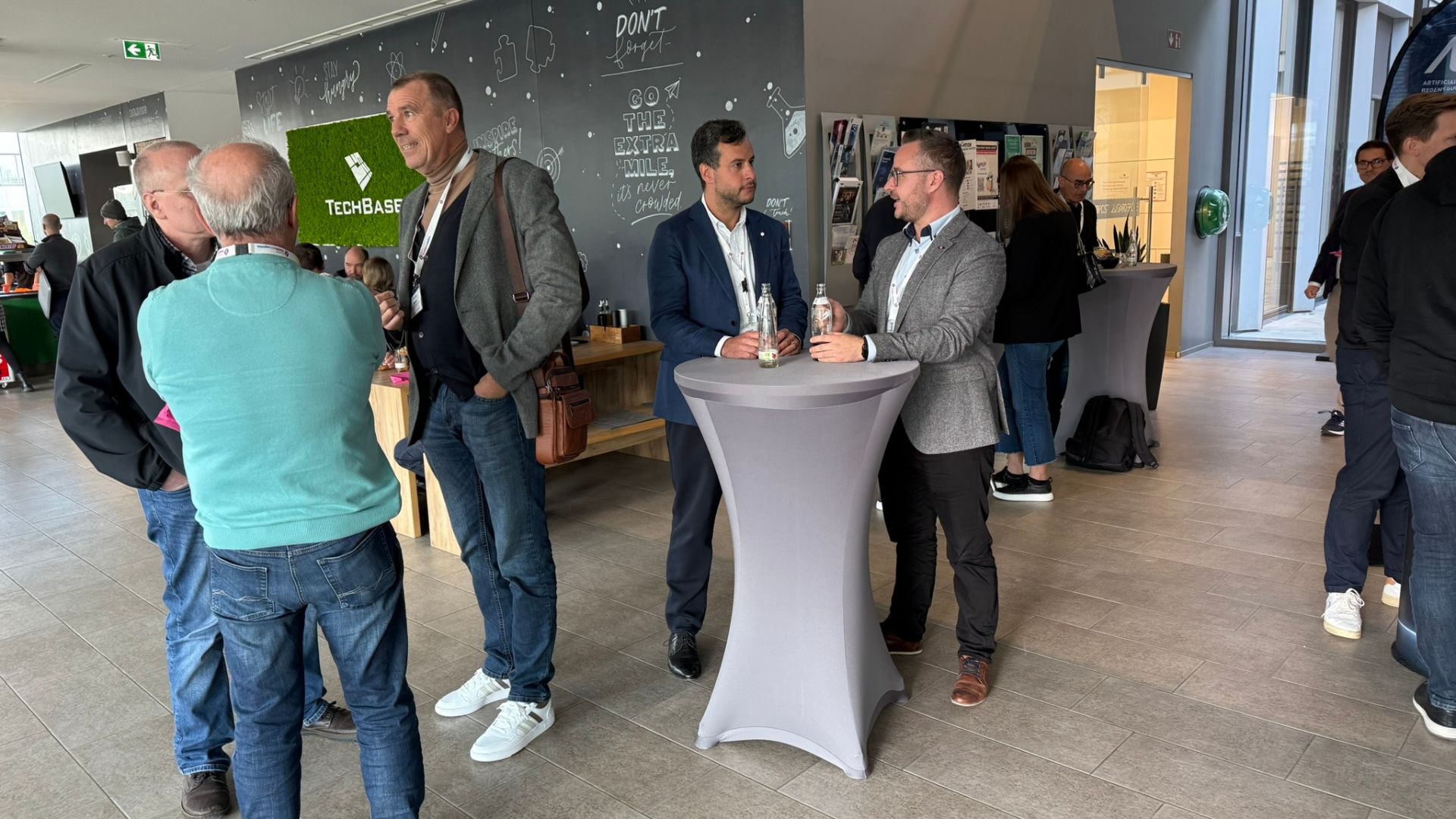
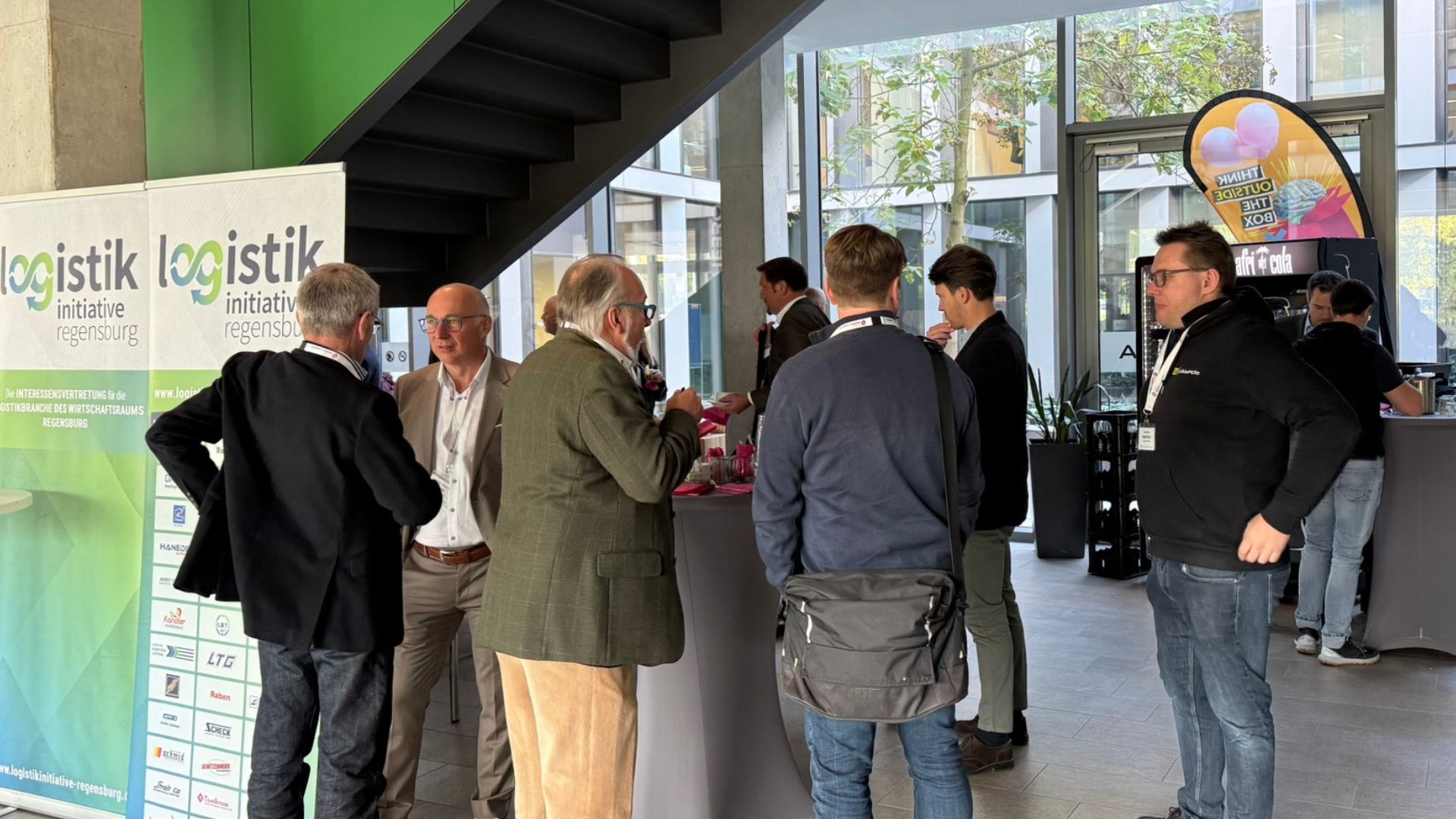
Parallel to the lecture series, companies such as E-Works Mobility GmbH and REICHHART Logistik, as well as the transformation network transform.r—funded by the Federal Ministry for Economic Affairs and Climate Action—presented themselves at an accompanying trade exhibition. The exhibition offered participants the opportunity to exchange ideas and network with solution providers in the fields of alternative propulsion systems, logistics IT, and vehicle technology.
The Transport Congress provided not only in-depth information on new technologies but also practical insights into ongoing transformation processes in the mobility and logistics sectors. The event made it clear: The future of transport logistics is diverse, open to all technologies—and it starts now.